
Signs posted in sensitive area near mouth of Gallatin Canyon
By Carli Johnson STAFF WRITER
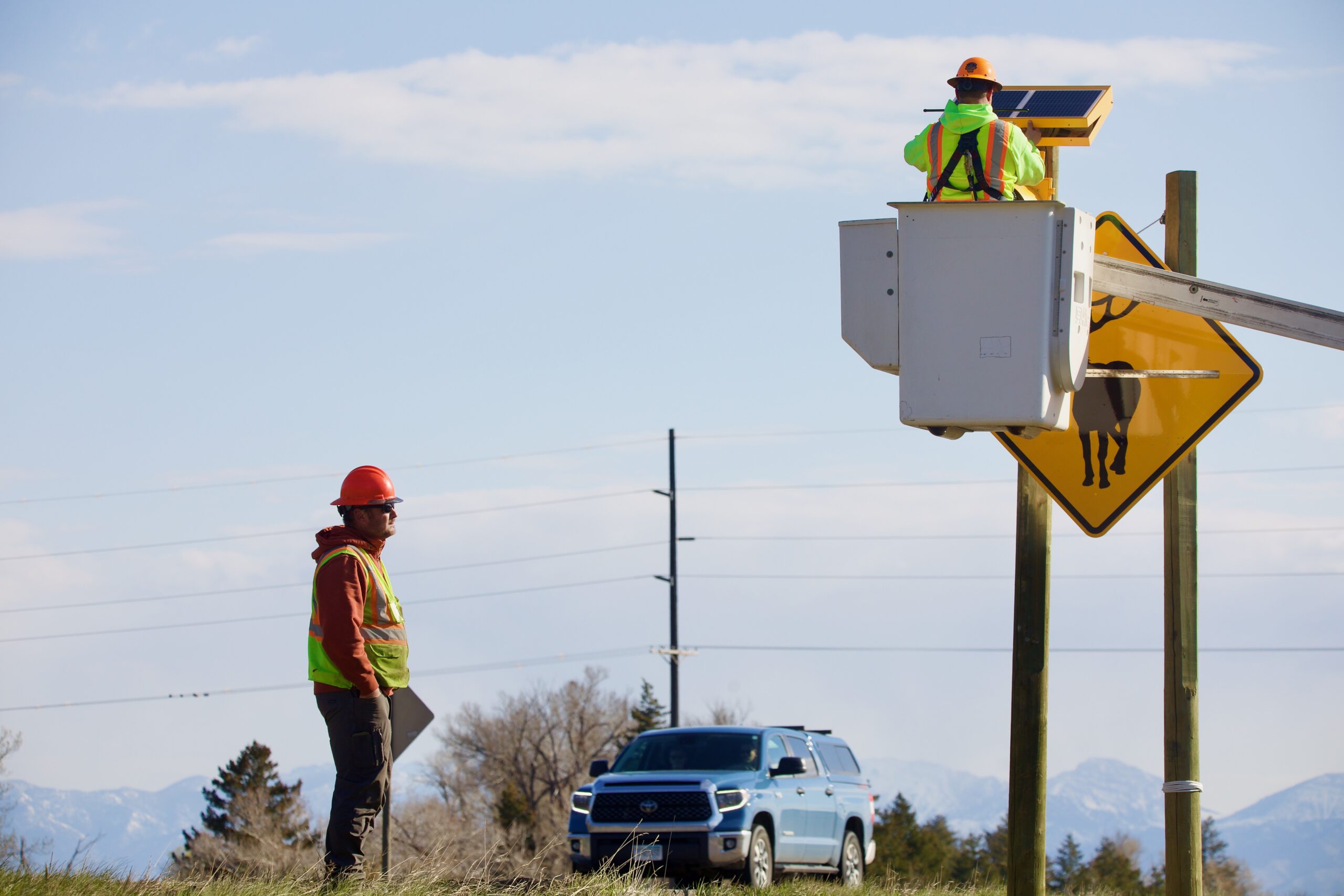
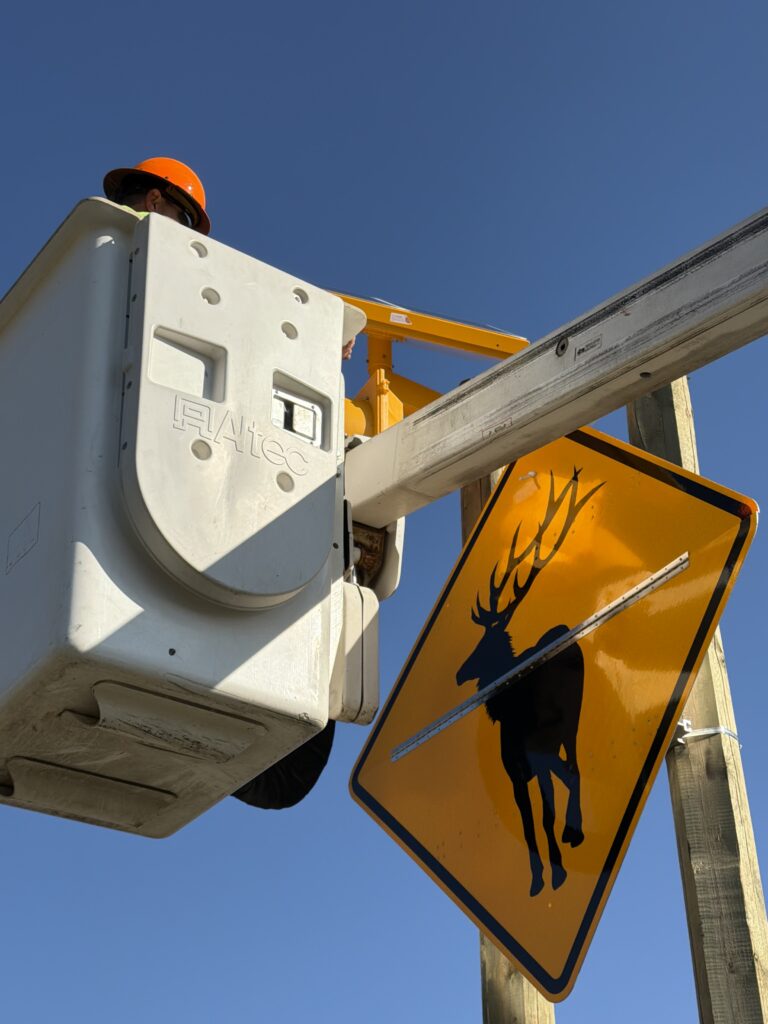
Drivers heading between Big Sky and the Gallatin Valley this past weekend may have noticed two new signs warning of popular elk crossing areas. On Thursday, April 30, the Montana Department of Transportation installed two solar-powered, illuminated signs along a stretch of U.S. Highway 191 in Gallatin Gateway, between Bozeman and Big Sky.
The Center for Large Landscape Conservation worked in collaboration with MDT and community members, including activist and wildlife photographer Holly Pippel, for several months to plan and execute the project. Donations from K.C. and Karen Walsh covered the cost of the signs, while MDT handled installation.

“It’s been a long time coming,” said Josh Williams, MDT’s supervisor for Gallatin Gateway and Big Sky. “It’s not going to completely prevent accidents, but at least there is something to get drivers paying attention.”
Pippel has been working to raise awareness along the corridor for years after encountering elk and deer carcasses while photographing herds.
“It started about three years ago when I started photographing and documenting the problem—for the elk,” she said. “I started pushing MDT for message boards during periods of high elk activity.”
In response, MDT installed variable message boards in recent years to flash messages warning of elk in the roadway, but they have since aged out of service, leaving the corridor without adequate working signs. Pippel, CLLC and other concerned community members then worked to get billboards posted along the route.
When those billboards expired, Pippel continued to brainstorm solutions and reached out to CLLC about collaborating on more permanent signage as part of broader efforts toward a wildlife crossing.
Pippel noted that the design of the signs—an elk silhouette without any text and a flashing light—was intentional. “The silhouette in yellow with the flashers is pretty universal to, hey, these are on the road, slow down,” she said.
She added that while local commuters are already aware of elk crossings along the corridor, visitors often have no idea the animals frequent the area. “I really do think it will have the greatest impact for visitors to our region, keeping people safe and wildlife safe.”
CLLC Road Ecologist Elizabeth Fairbank said the signs are placed within the area where advocates hope to one day build a wildlife crossing. Sign locations were chosen using scientific data and GPS-collar tracking of elk to pinpoint where the animals cross U.S. Highway 191.
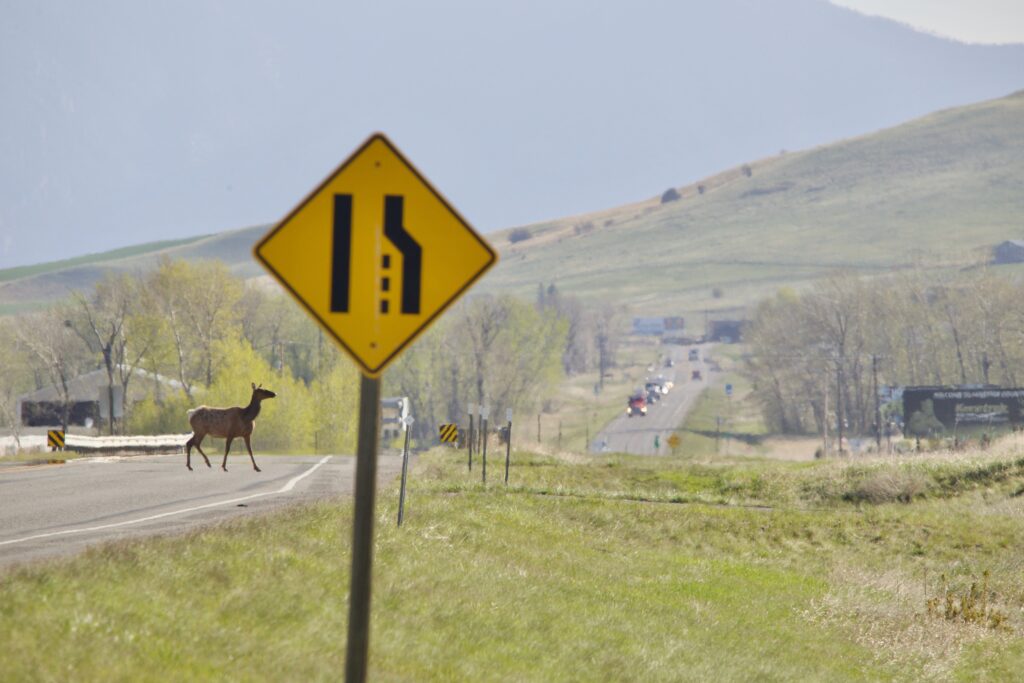
“They’re placed kind of in the start and the end of that wildlife crossing zone, and that’s where the project hopefully will ultimately be implemented,” Fairbank said. “We have so many visitors around here who just don’t expect there’d be elk standing in the middle of the road as they often are there.”
The CLLC noted that while the signs are not a long-term solution, the organization hopes they encourage caution along the wildlife corridor until expensive but worthwhile road crossings can be constructed.
Community members are encouraged to reach out to CLLC to support the nonprofit’s goal of securing funding and support for the wildlife crossing infrastructure that would allow elk to move freely across their Gallatin Gateway range.