

Law enforcement, immigration advocates weigh in on local agreements with ICE
By Jen Clancey STAFF WRITER
Vanessa Zamora estimates that Bienvenidos a Gallatin Valley, a Bozeman-based nonprofit, has assisted at least 10 local families in tracking a relative who has been detained by immigration enforcement.
“It’s been interesting for us because we were never meant to be involved in this kind of work,” said Zamora, Bienvenidos’ executive director.

Bienvenidos has welcomed Spanish-speaking immigrants to the Bozeman area since 2021, and in 2024, the organization supported 56 families, including 107 children with resources, immigration support and family activities to thrive in their new home.
“We are set up to be family-oriented, and support families, and welcome families and develop belonging and programs that care for the immigrant community,” Zamora said. “Which is crucial for our economy, crucial for our state, crucial for all of the services that move the economy of Montana.”
In recent months, Zamora said the organization has begun addressing a need that is new to the nonprofit: the challenging task of locating family members and friends detained by Immigration and Customs Enforcement—some starting with an Immigration Customs and Enforcement hold in Gallatin County, some arrested on Montana highways and others arrested outside of the state.
Bottom line is, it’s difficult to understand the way ICE and immigration enforcement is affecting southwest Montana communities like the Gallatin Valley.
Breaking down types of 287(g) agreements
State law enforcement, like Montana Highway Patrol, can detain individuals for immigration violations through an agreement with ICE’s 287(g) program, which gives state, county and city law enforcement authority to carry out immigration enforcement across four different agreement types. There are more than 1,400 individual 287(g) agreements between ICE and local or state police across the U.S., including four in Montana.
Iterations of 287(g) agreements that exist in Montana include four different models: a Task Force Model, which enables officers to carry out immigration enforcement like arrests with ICE oversight during routine duties—Montana Highway Patrol entered this agreement in 2025; a Tribal Task Force Model, which functions similarly for tribal law enforcement; a Jail Enforcement Model, which allows officers to identify and process noncitizens arrested in their detention center; and a Warrant Service Officer program, which serves ICE-issued detainer warrants for individuals in their detention centers.
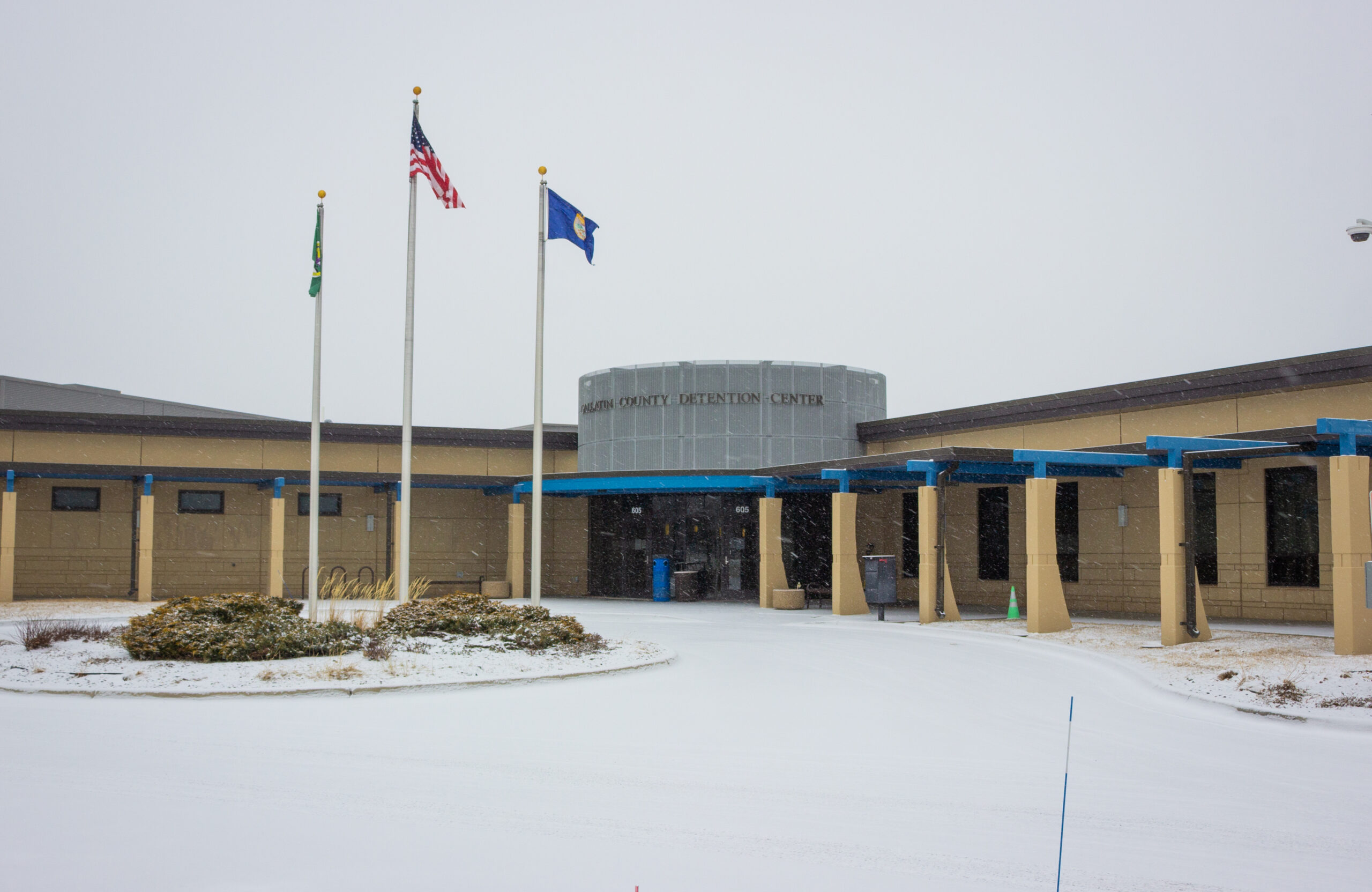
The Gallatin County Sheriff’s Office is five years into a WSO contract. Gallatin County Sheriff Dan Springer described the 287(g) role in county law enforcement as “simple.”
Under this model, ICE reviews individuals who are booked into the Gallatin County Detention Center and will identify individuals for detainer warrants, which will ultimately be served by a 287(g)-trained GCSO officer. An ICE agent must pick up the individual within 48 hours of a detainer warrant. If the individual posts bond but has a detainer warrant, they are held for the extra 48 hours. If ICE doesn’t arrive within the two day period, they are released.
Gallatin County is also a part of the Missouri River Drug Task Force, a multi-jurisdictional drug task force dating back to 1990. Alongside GCSO, Broadwater, Lewis and Clark, Madison, Meagher, Park and Sweet Grass counties participate in the program, which has headquarters in Helena, and is staffed by county law enforcement and the Department of Homeland Security, FBI, Drug Enforcement Agency, Montana Department of Justice and several city police departments.
While not a 287(g) program, the relationship underscores growing tension many agencies face as ICE presence increases in the country; Montana Gov. Greg Gianforte and Attorney General Austin Knudsen opened an investigation of the city of Helena’s resolution to avoid ICE partnerships less than a month after Helena Police Department Chief Brett Petty opted out of the MRDTF due to its collaboration with U.S. Border Patrol. Both 287(g) and MRDTF involvement are voluntary.
Aaron Conner, undersheriff at the Garfield County Sheriff’s Office, signed a Task Force Model agreement in August 2025. In an October interview, Conner said he sees the agreement as a tool for enforcement in the 4,800-square mile eastern Montana county, and that the training program teaches officers about constitutional rights.
“We wanna make sure all of our residents, none of ’em have an issue with reaching out to us,” Conner said. “This isn’t, you know, a racial profiling thing or anything like that.”
Serving Garfield County is a vast undertaking, Conner said. Sometimes it takes 45 minutes to reach a call on the other side of the county, and the area is a popular spot for hunting and recreation, adding traffic to highways that run through it. Covering salaries for officers has required outside funding; Conner said that as of October 2025, 50% of officers’ overtime was paid for by grant funding.
The 287(g) program announced in October 2025 reimbursements for Task Force Model-participating agencies by the order of salary, benefits and partial overtime coverage, $7,500 for new equipment and $100,000 for new vehicles. While Conner is unsure about receipt of reimbursements, he said this financial support would be beneficial for his department. One U.S. state was reportedly paid those sums in September 2025, but ICE representatives did not respond to questions about reimbursements for Montana’s Task Force Model agreements, and there are no clearly stated timelines.

Alex Rate, Montana American Civil Liberties Union’s legal director, is critical of the program.
“ First of all, I think 287(g), full stop is a terrible idea and certainly not what local law enforcement should be spending their time doing,” Rate said. “They should not be taking their time being commandeered by the federal government to undertake federal immigration actions where the federal government has plenary control.”
He explained that training is insufficient for enforcement of immigration law in 287(g) programs, and programs like this could invite racial profiling as officers work to determine citizenship status of people they interact with. A 2021 letter signed by over 100 police officers and attorneys to the Department of Homeland Security also shared concerns about the breakdown of trust between law enforcement due to 287(g) agreements.
Training for the Task Force Model requires a 40-hour online training course for eligible participants, and officers need two years of experience to be trained. In jail enforcement models, officers complete a four-week training and one-week “refresher course,” and WSO training lasts eight hours.
The 287(g) program contracts do not have end dates, so usually when an agreement is approved and signed, it will exist indefinitely. However, citizens can advocate for ending an agreement or ask for further transparency about how it’s enforced.
“One of the things people need to remember about 287(g) agreements is that it is a contract and the contract needs both parties to be in agreement. And these are governments elected by the people,” Rate said. “And if folks are dissatisfied with their local law enforcement entering into an agreement, then they should raise hell at the county commission and get their elected officials to put pressure on law enforcement to withdraw from these agreements.”
ICE rumors add confusion, remind advocates to be prepared for increased presence
In late January, as students and businesses nationwide hosted walkouts in protest of ICE presence in U.S. communities, murmurings of increased ICE presence in the Gallatin Valley spread. Those rumors reached Zamora and the Bienvenidos team.
“We tried our best to get to the bottom of everything and provide the information and then talked with everybody and tried to put out the facts that we knew … it activated a lot of our thinking around how we prepare for that,” Zamora said.
Sheriff Springer—who that same week shared a letter addressing rumors and condemning “vigilantism” and attempts “to create fear and chaos within our community”—confirmed he had conversations with Zamora, as well as Bozeman schools and Bozeman Health Deaconess Regional Medical Center about rumors of further ICE activity.
“I recognize how people are … worried about this, or fearful,” Springer told EBS. He shared anecdotes about search and rescue volunteers being followed and two sheriff’s office personnel confronted about being ICE officers in a restaurant, despite clear sheriff’s uniform markings.
“You know, the problem is those little rumors carry themselves for days and it just makes people worried for zero reasons,” Springer said.
Zamora emphasized that the Latino community also wants to live in a safe place where law enforcement can do its job, but she doesn’t want people to be scared of interacting with law enforcement in the state because they speak Spanish and have brown skin.
She recalled tracking two local high school graduates, one detained by ICE outside of Montana and deported to a country they’d never been to before, and another detained on a Montana highway and transferred to a regional ICE detention center in Washington.
As Bienvenidos continues its core mission, right now it is also about providing community members with the resources to help locate and help local family and friends in the throes of complex ICE enforcement.
“We were set up to welcome newcomers and make them feel seen, because it’s difficult to move to a new place and even more, a new country with a new language and a new culture,” Zamora said. “We care for their safety and their wellbeing, and their safety and their wellbeing is threatened by discrimination.”
This piece was made possible by support from the International Center for Journalists’ News Corp Media Fellowship program.